
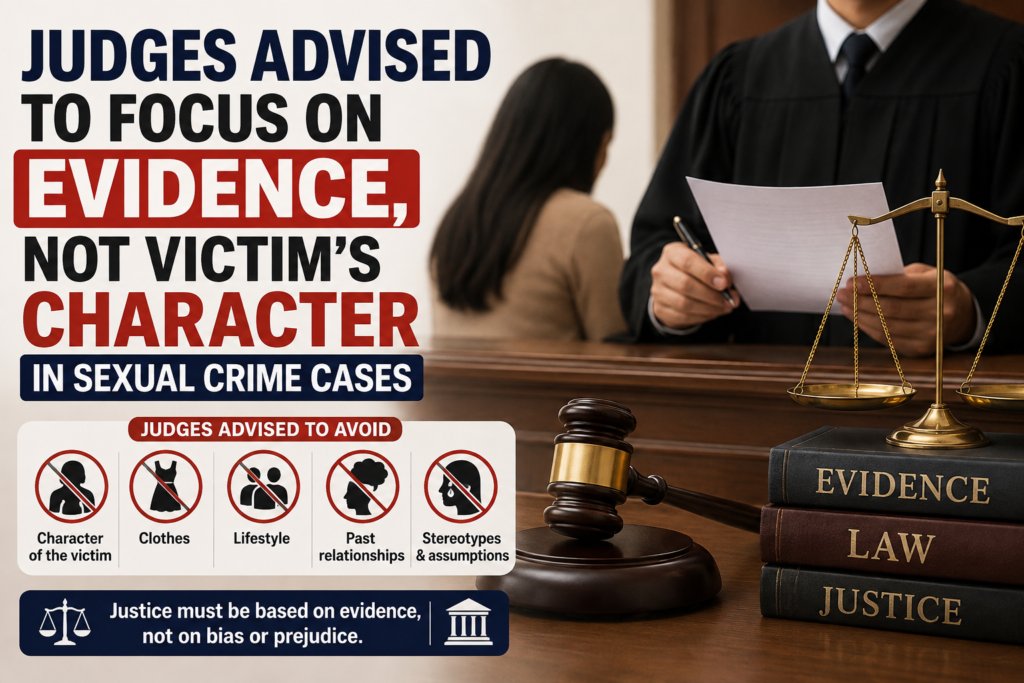
In a significant move aimed at ensuring a more sensitive and victim-centric justice system, judges handling sexual offence cases involving women have been advised to base their decisions strictly on evidence rather than the victim’s character, clothing, lifestyle, or personal choices. They have also been urged to avoid using terms such as “outraging modesty,” “prosecutrix,” “helpless woman,” “lust,” “honour,” and “shame” in judicial proceedings and judgments.
The guidelines have been issued by an expert committee of the National Judicial Academy on the directions of the Supreme Court. The committee was headed by former Supreme Court judge Justice Aniruddha Bose. According to the report, judicial language is not merely a tool of expression but a foundation for delivering fair, dignified, and unbiased justice.
The report emphasizes that courts must not draw adverse conclusions from the absence of physical injuries, a victim’s lack of resistance, or any delay in filing a complaint. It further states that issues of consent should be assessed without prejudice or discrimination.
For cases involving persons below 18 years of age, judges have been advised to use the terms “child” or “minor” and to prioritize principles such as bodily autonomy, consent, dignity, and child rights.
The guidelines also direct courts to prevent humiliating or irrelevant cross-examination concerning a victim’s clothing, personal life, or past conduct. Immediate legal aid and compensation should be provided after the registration of an FIR, while witnesses should not be subjected to unnecessary delays or inconvenience during court proceedings.
The committee noted that insensitive language, gender stereotypes, and victim-blaming remarks can further traumatize survivors and hinder access to justice. Courts have therefore been encouraged to adopt respectful, neutral, and survivor-centric language.
The report was prepared in compliance with the Supreme Court’s order dated February 10, 2026. The order followed controversy surrounding an Allahabad High Court judgment, after which the Supreme Court directed a review of the 2023 Gender Stereotypes Handbook and called for the formulation of fresh guidelines suited to India’s social realities.
The guidelines also stress the need to ensure witness safety and create a judicial environment that upholds the dignity and rights of survivors throughout the legal process.
Posted inTOP STORIES